Positive versus negative reviews
Create separate clouds to compare the product features and experiences associated with high and low ratings.
Explore the language customers use around a brand by creating separate word clouds from reviews, mentions, surveys, and campaign comments.
Sentiment themes from reviews, mentions, surveys, and campaign comments.
Separate positive, negative, and neutral text before creating the visual whenever sentiment labels are available. A single combined cloud can make praise and complaints look identical because word size represents frequency, not tone. Clean brand names, campaign boilerplate, URLs, and repeated source labels unless they are directly relevant to the question.
Compare clouds across products, markets, time periods, or customer segments using the same cleaning rules. Use recurring words to locate themes such as quality, value, reliability, service, or trust, then return to the original mentions to understand context. Report counts and representative quotations alongside the cloud so the visual is not mistaken for a complete sentiment model.
Create separate clouds to compare the product features and experiences associated with high and low ratings.
Summarize the language audiences use after a launch while keeping organic mentions separate from campaign copy.
Track changes in customer language across countries, product versions, or reporting periods with consistent datasets.
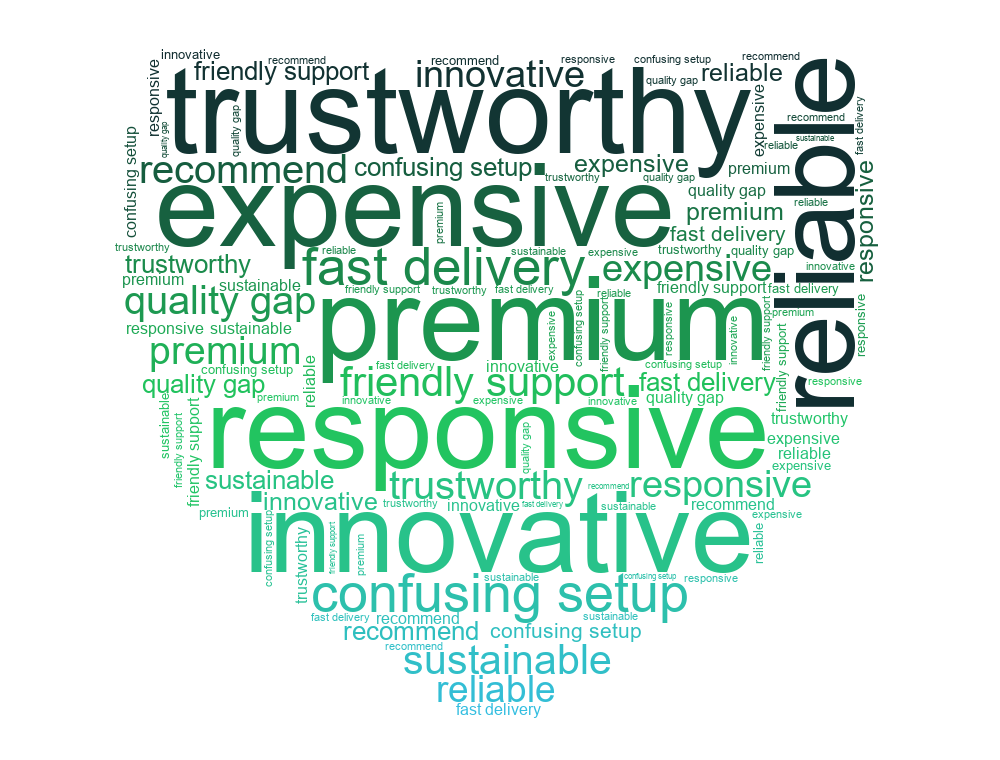
Positive and negative brand associations from social listening.
Audience reaction terms for a brand campaign recap.
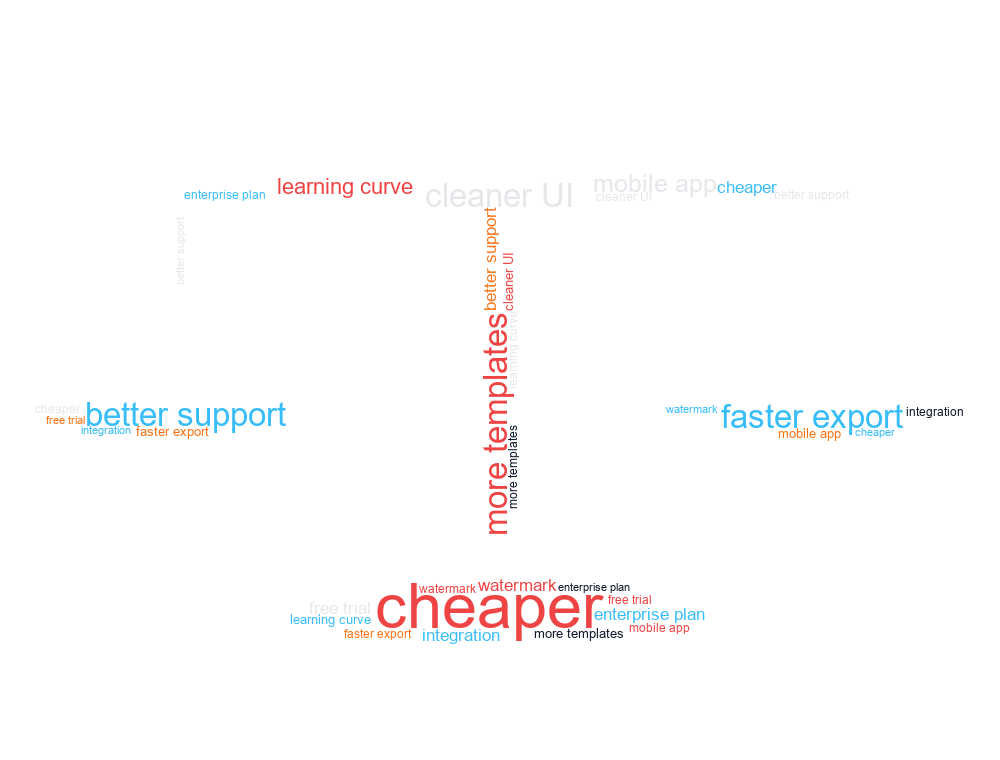
Comparison themes across competitor reviews.
Not on its own. It shows recurring language. Use sentiment labels or separate positive and negative sources before interpreting tone.
Usually yes when every record contains it, because it can dominate the cloud without adding insight. Keep it only when comparing mentions across several brands.
Include the source, period, sample size, cleaning rules, counts, and representative quotations so viewers understand what the visualization does and does not show.